Loyalty Software
Part of Loyalty programme economics
Modelling points earned and redeemed separately
Build a points movement schedule, separate pending and spendable balances, and forecast reward use without treating points as cash cost.
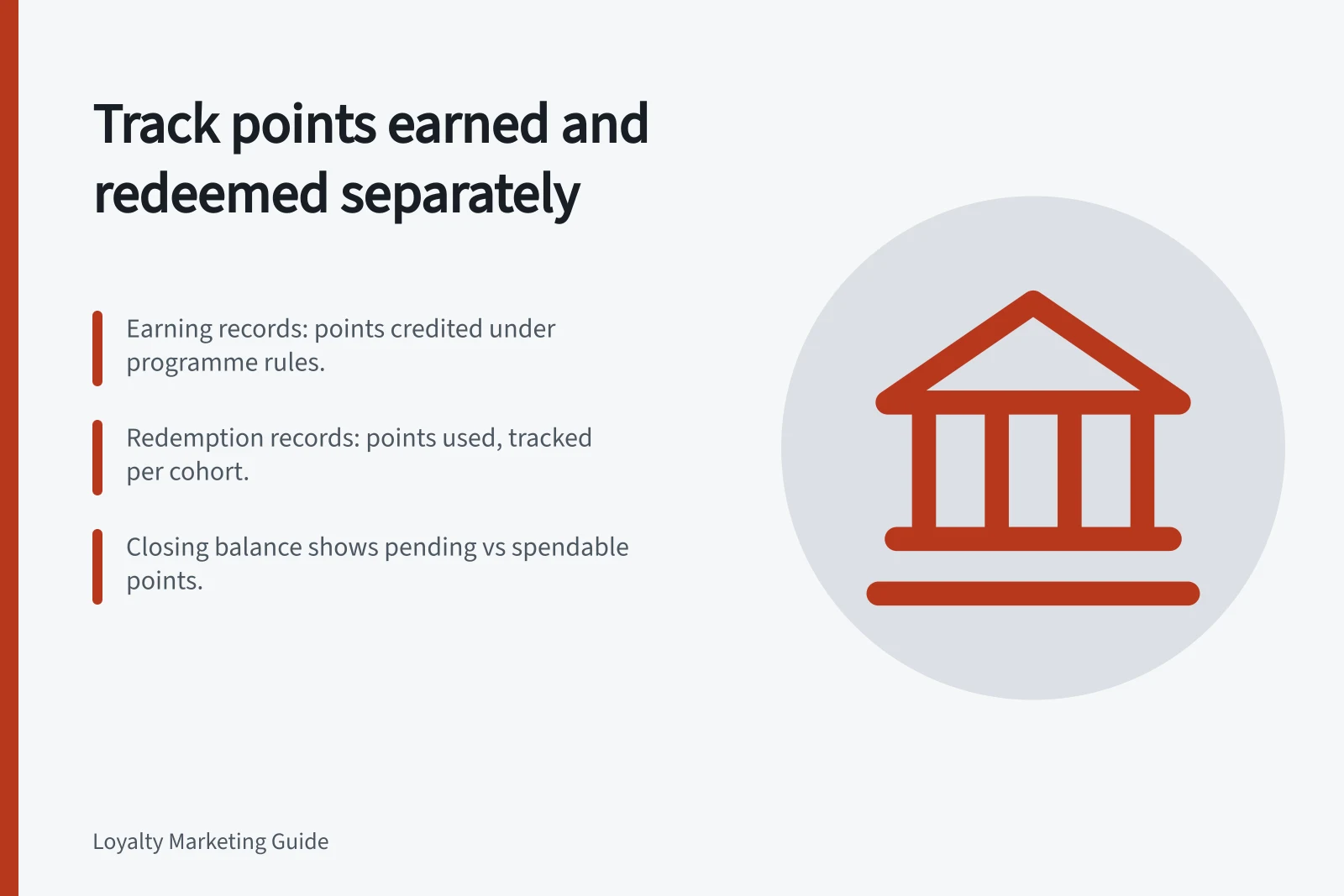
Model points earned and redeemed on separate lines. Earning records points credited under the rules; redemption records points used. The closing balance shows what remains pending or spendable. Forecast reward supply costs separately from the points count.
Build a points movement schedule
Choose a period, and where useful an earning cohort, such as members who first earned points in a given month. Reconcile each cohort to transaction records:
Opening points + points earned − earning reversals − points redeemed − valid expiries + or − documented adjustments = closing points.
Pending points stay in the closing total but report them separately from spendable points. Use separate schedules if point types or expiry rules differ. A refunded order should leave an award and reversal in the records rather than vanish from the history.
This example is hypothetical and starts with no points:
Movement / Points
- Earned
- 10,000
- Reversed after returns
- −500
- Redeemed
- −3,000
- Expired under the stated rules
- −200
- Closing balance
- 6,300
If 400 of the closing points are pending, 5,900 are spendable. These are point movements, not Australian dollars or profit.
Forecast use and fulfilment
For each cohort, estimate when points become spendable, how many might be redeemed and which rewards members might choose. Use programme history where available and include a higher-use scenario. One redemption rate can conceal differences between new, frequent and inactive members.
If claiming a voucher and using it are separate events, track both. A voucher that expires unused, fails to apply or is restored after cancellation needs a defined status. Otherwise, a report may count a cost before supply, or miss an open promise.
Convert forecast reward use into operating cost using the expected mix and each reward’s fulfilment cost. Do not call all outstanding points a cash cost by multiplying them by one advertised value. Discounts, products and partner benefits can cost different amounts for the same points price. Include relevant limits, minimum spends and stock conditions in the forecast.
Key Points Metrics for Forecasting
- Forecast Redemption Rate (High Use Scenario)
- Higher than average
- Reward Fulfilment Cost per Point
- Varies by reward type
- Voucher Status Tracking Required
- Yes – including expiry, failure, restoration
- Point Type & Expiry Rule Separation
- Required in separate schedules
Reconcile the balance and review changes
Tie opening and closing balances to award, redemption, reversal, expiry and adjustment records. Check that each order or refund is posted once and that unsuccessful reward uses receive the restoration required by the programme rules.
The movement schedule is not a financial accounting method. AASB 15 includes application guidance on customer options for additional goods or services and customers’ unexercised rights. Keep the movement schedule separate from any assessment under those requirements.
Keep the rule version attached to each affected cohort when earn rates, point values or expiry rules change. A forecast should account for existing balances as well as new earning.