Programme Refresh
Part of Loyalty communication
Announcing a programme change transparently
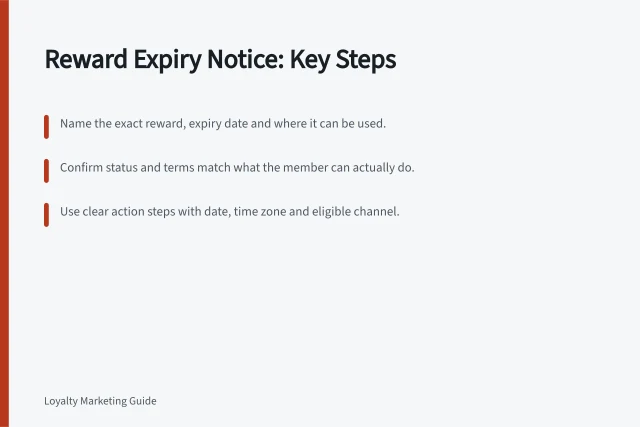
Explain loyalty rule changes with old and new terms, effective dates and clear treatment of existing points and rewards.
A transparent announcement tells affected members what rule changes, who is affected, when it takes effect and how existing value is treated. Send it early enough for members to make an informed decision; “We’ve updated our terms” does not explain the change.
Draft in this order: the old rule, the new rule, the effective date, how points or rewards already earned are treated, any action members need to take, and where to read the terms or ask for help.
Identify who is affected
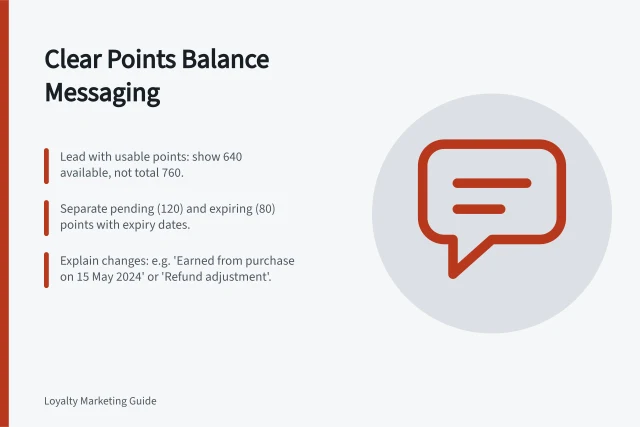
Record each changing rule, its effective date and the members it affects. Separate future earning from existing balances, issued rewards, bookings and tier benefits: a lower earn rate on future purchases differs from reducing the value of points already held. Do not describe either vaguely as an improvement.
For each affected group, establish what members can do under the current rule and after the change. Identify which earlier terms govern existing entitlements and whether an action or deadline applies before transition. Tell each group the rule that applies to them, and settle the treatment of earned benefits before announcing the change.
Explain the consequence before the detail
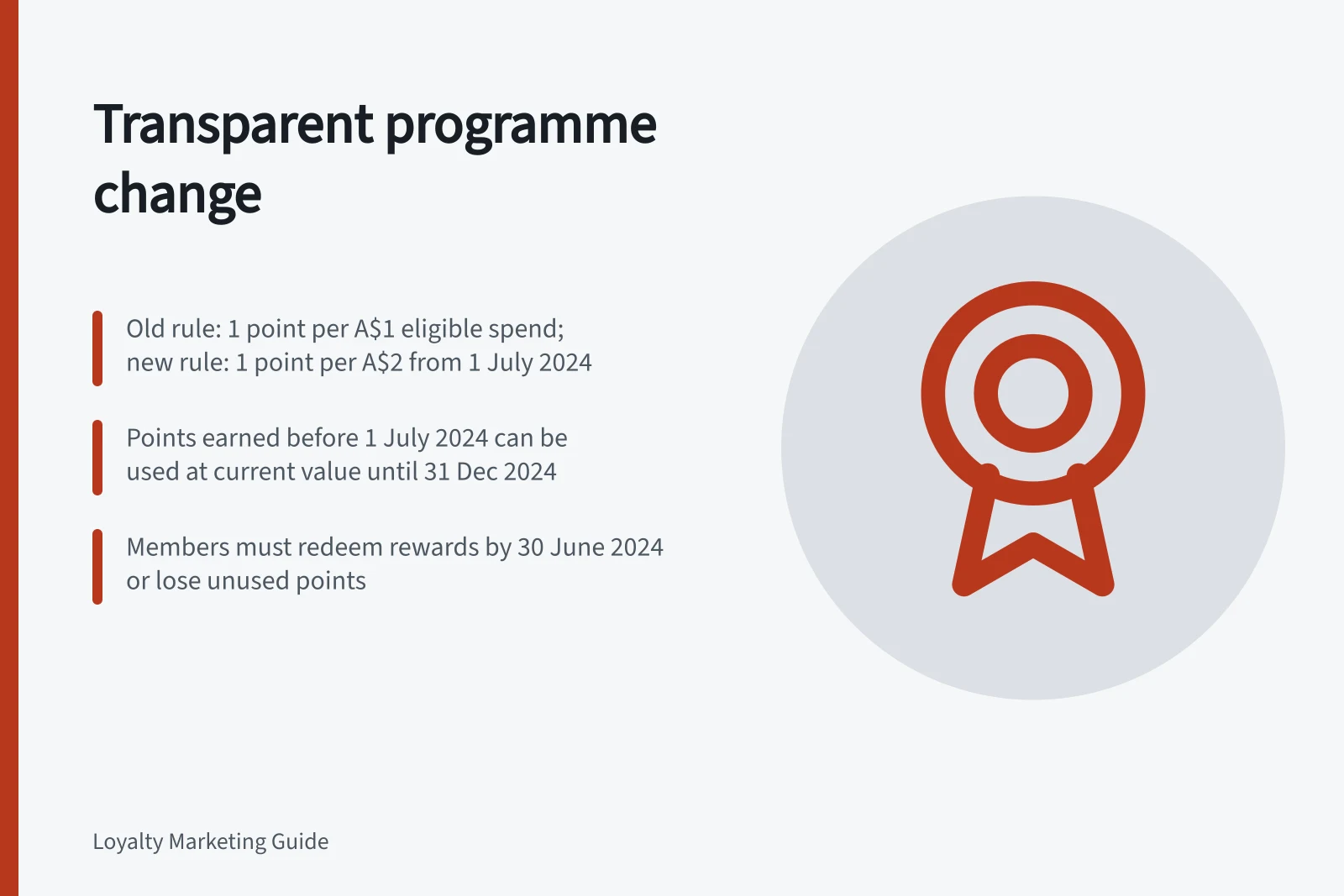
Use a before-and-after explanation members can apply to their own account. For example, if the earn rate changes from one point per A$1 of eligible spend to one point per A$2, say that the new rate applies to eligible purchases from the stated effective date.
Separately explain how points already earned can be used. If reward prices or point value also change, describe those effects rather than letting the earn-rate notice imply they do not.
Fill-in notice wording: From [effective date], [old rule] changes to [new rule] for [affected purchases or members]. Points already earned can be used [state treatment]; members who need to act before the change should [state action and deadline]. Read [location of applicable terms] or contact [member help route] about a balance or entitlement.
State exclusions and rounding rules where they materially affect the result. Keep claims about benefits, point value and transition factual and supportable; the ACCC can require businesses to back up claims about their products or services.
Give members a usable transition
Set an effective date that gives affected members a practical opportunity to use existing points where possible. Members who must book a service or make an eligible purchase may need more time than those who can use a digital reward immediately.
State any cut-off, action members need to take and what remains available after the change. If offering compensation or another transition measure, explain what it provides and who qualifies. Check the transition against existing terms and commitments, and promise continued access to an old rule only if the programme can honour it.
Keep the explanation consistent
Align the account view, reward catalogue, checkout copy, staff guidance and terms with the effective date. Use the same old rule, new rule and treatment of existing entitlements wherever members see the change. Preserve the earlier rule so support can explain activity before the cut-off.
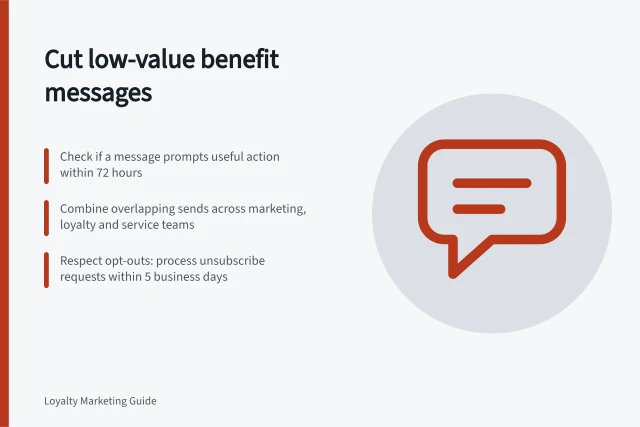
If a change email or SMS includes a sale offer or direct promotional link, review its full content and intended purpose before sending. Give members a way to query a balance or entitlement, then review questions, disputed balances and failed claims; an open rate alone does not show that members understood the change.
For a concern about misleading behaviour, members can report it to the ACCC. The ACCC may investigate and take compliance or enforcement action, but it does not resolve individual disputes about misleading claims.