Loyalty Fraud
Part of Loyalty fraud and abuse
Identifying unusual reward redemption patterns
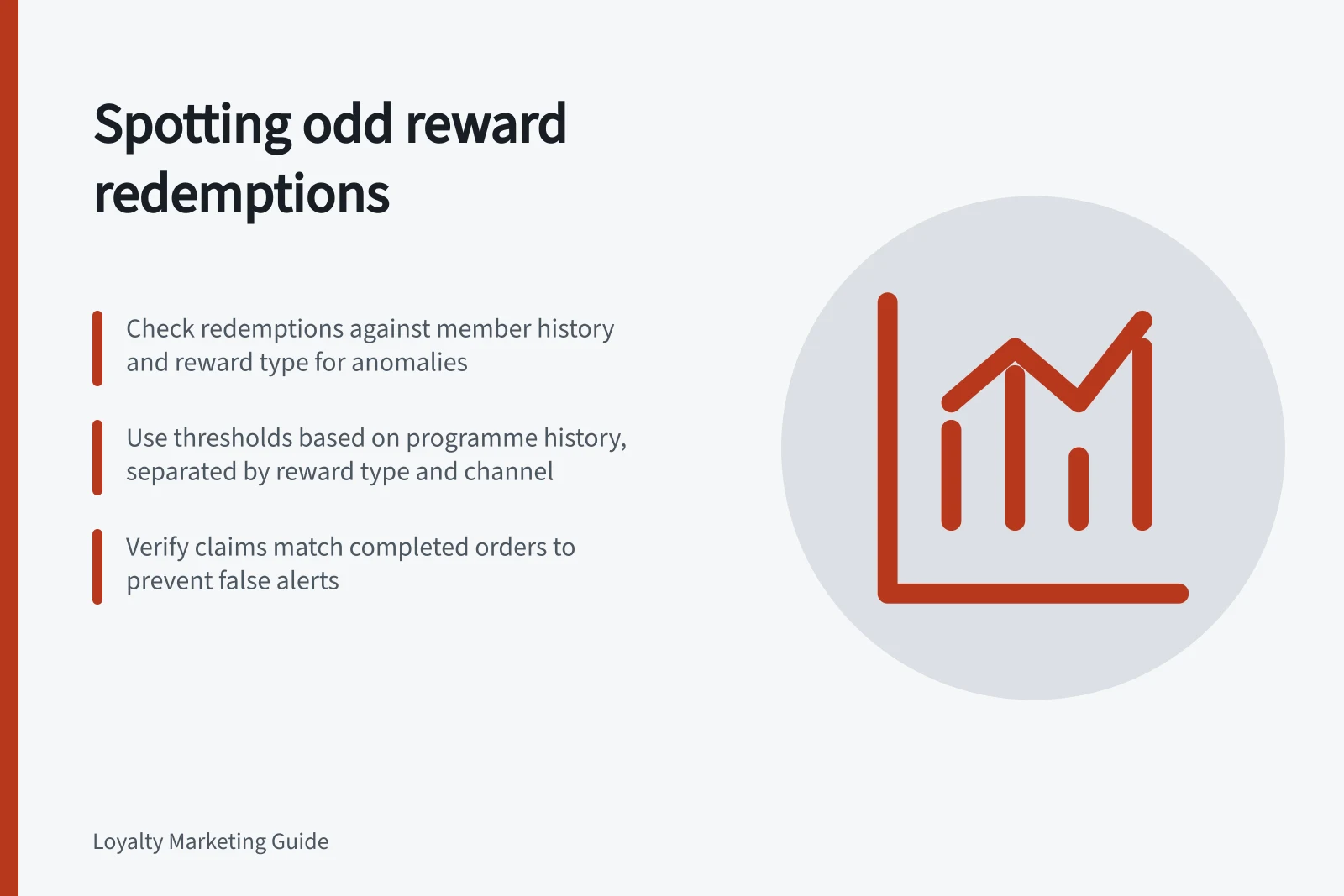
Build a review queue for unusual reward redemptions using traceable events, relevant comparisons and checks for ordinary explanations.
Compare each redemption event with relevant member history, reward type and fulfilment records to find unusual activity. Queue the result for review. A rapid or large redemption can be legitimate, while a quiet redemption can still be unauthorised.
Make redemptions traceable
Where the programme records them, link attempted and completed redemptions to member, reward, points amount, time, channel, order or voucher reference, and outcome. Keep a cancelled or expired claim distinct from a reward used in a completed transaction, and link any points restoration to the original claim. Otherwise, a failed checkout may look like successful reward use.
Relevant account events may include a recent password reset, contact-detail change, new sign-in or support adjustment. Limit investigator access to the information needed for the case.
Compare relevant activity
Pattern to review / Ordinary explanation to check
- Several redemptions in a short period
- A promotion, several eligible purchases or delayed batch posting
- A large redemption after inactivity
- A member using an accumulated balance
- A redemption after account details changed
- A legitimate update or possible account takeover
- Claims without matching completed orders, where an order is required
- Cancellations, checkout errors or a fulfilment mismatch
Choose thresholds from the programme's own history, separated by reward type, channel and promotion where useful. Review points spent and transaction counts separately: one large redemption raises different questions from many small ones. Check false alerts after campaigns and adjust the rule when it produces unhelpful queues.
Redemption Risk Indicators by Pattern Type
- High-risk pattern
- Redemption after account detail change
- Moderate risk
- Multiple redemptions in short time
- Low risk (context-dependent)
- Large redemption after inactivity
- System issue indicator
- Claims without matching completed orders
Triage and resolve
First compare the loyalty ledger with order and fulfilment records. Check delayed imports, retries and rule changes. If appropriate, ask the account holder about unfamiliar activity through an established, secure contact route. Do not send sensitive details to newly changed contact information before checking identity.
Prioritise value that has already left the programme or an imminent fulfilment. If a temporary pause is warranted, limit it to the affected reward where practical, record the reason and review it promptly. A processing fault calls for a corrected balance and a system fix, not an accusation against the member.
Close each alert as explained activity, processing error, account compromise, confirmed rule breach or insufficient evidence. Track wrongful holds as well as confirmed losses.