Programme Design
Part of Partner and coalition loyalty
Explaining who handles a partner reward problem
Give members a clear contact route for missing partner points, failed vouchers and problems with a supplied reward.
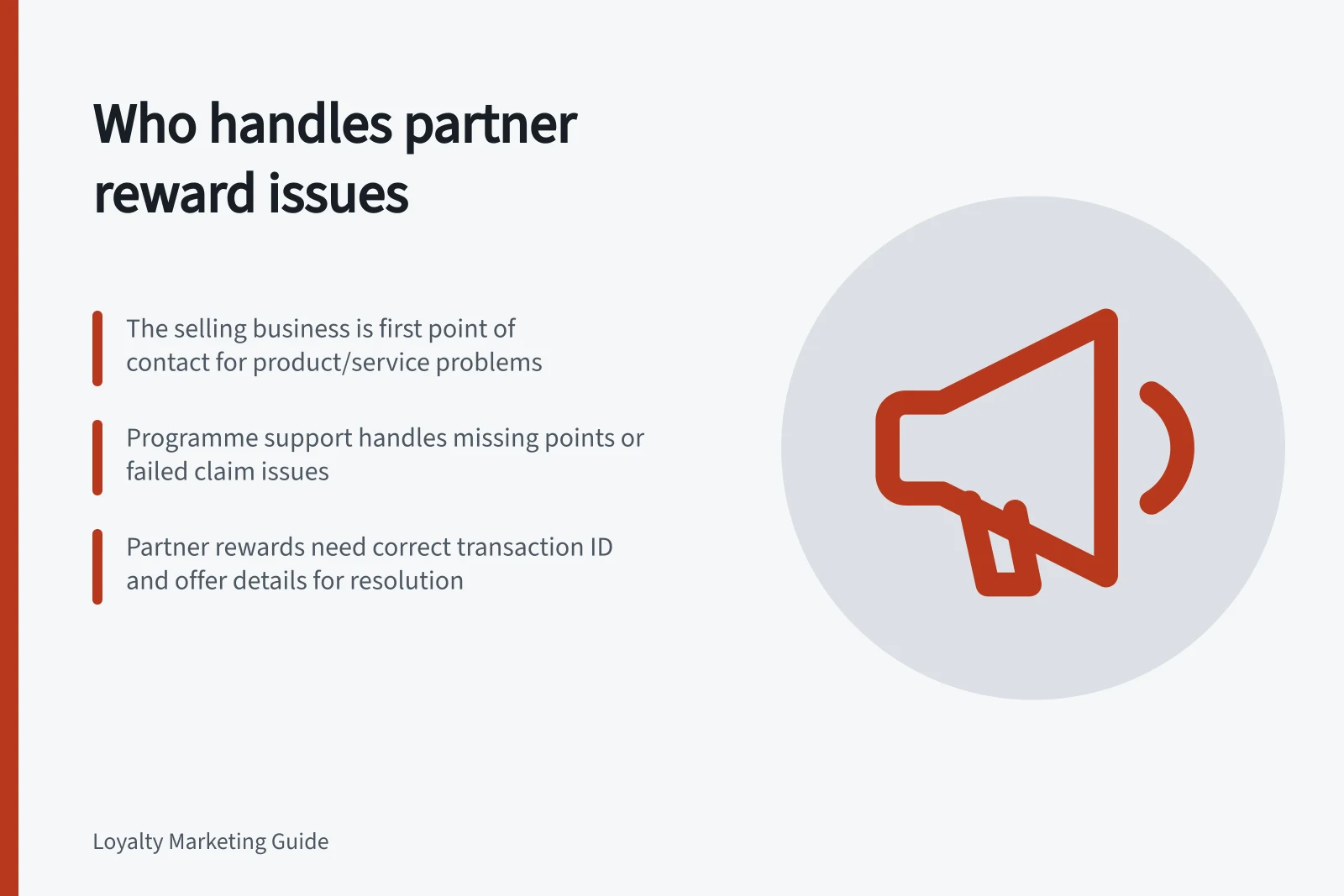
Programme support is the practical first contact for missing points or a failed programme claim. For a problem with a product or service bought from a partner, the selling business is the usual first contact for a consumer-guarantee issue. The actual seller, offer and transaction determine how the case is handled.
Route the member to the right record
| Member reports | Start with | Record to inspect |
|---|---|---|
| Points missing after a partner purchase | The programme’s points help route | Receipt, eligible transaction and account history |
| Points deducted but no reward issued | The programme’s reward help route | Claim status and points movements |
| Voucher issued but rejected by a partner | The named programme or partner claim contact in the offer | Voucher status and partner acceptance record |
| Problem with a product or service sold by a partner | The business that sold it | Purchase or booking record and the problem reported |
Publish the actual contact route for each offer. A member should not have to guess whether a rejected voucher is a points error, an acceptance error or a supply problem. Where two organisations must investigate, the team receiving the case should explain the next hand-off and give the member a reference.
A partner reward may instead involve a voucher or another entitlement, so identify the actual transaction before stating a remedy.
Explain what is being checked
Ask for the details needed to find the case: transaction date, participating outlet, receipt or order reference, and affected reward. Avoid requesting a full account history when one purchase is in dispute. Tell the member who owns the update and when they can expect it under the service process the parties have agreed.
For missing points, compare the receipt with the eligibility rule in force at purchase, then look for a pending, posted or reversed award. If the partner record has not arrived, describe the award as under investigation rather than declaring the purchase ineligible.
For a failed redemption, establish whether points were deducted, a voucher was issued and the partner accepted or supplied the benefit. Check the actual terms and applicable rights before promising restored points, another reward or a refund. Link any correction to the original claim so a late partner update does not create a duplicate outcome.
Close the case in plain language
The response should identify the transaction, the rule or record used, the outcome and any remaining action. If another business must act, name that business and explain how the member can reach it; keep the programme’s own points or voucher investigation open until its part is resolved.
Review cases transferred repeatedly between the parties. They may show that contact details, participating outlets or earning conditions were unclear. Explaining partner rates and outlets at purchase can help prevent later disputes.
Key facts about consumer rights in loyalty disputes
- Consumer guarantee coverage
- All products/services sold by partners are covered under Australian Consumer Law
- Responsibility for faulty goods
- The selling business is responsible, even if delivered via a partner
- Loyalty scheme transparency
- Programmes must clearly state earning conditions, partner outlets and rates